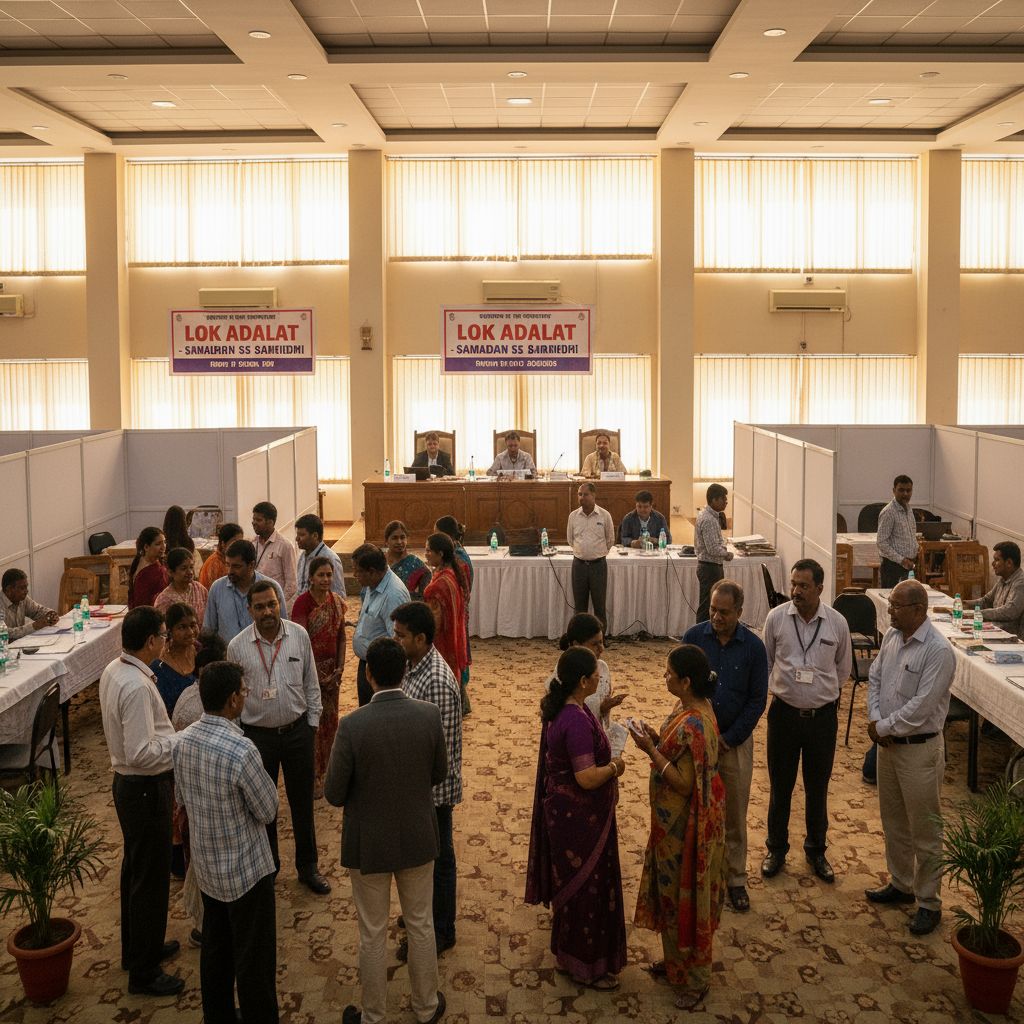
Lok Adalat, meaning “People’s Court,” represents one of India’s most effective alternative dispute resolution mechanisms, established under the Legal Services Authorities Act, 1987. This comprehensive system has transformed how borrowers and lenders resolve financial disputes, offering a faster, more affordable alternative to traditional litigation while providing significant benefits to all parties involved.
What is Lok Adalat?
Lok Adalat is a statutory forum designed to settle disputes through mutual agreement and conciliation rather than adversarial proceedings. The system operates on the principle of voluntary participation, where both parties must consent to any settlement reached. Unlike traditional courts, Lok Adalats focus on compromise and negotiation, making them particularly effective for resolving loan-related disputes.
Key Characteristics
• Voluntary Nature: Participation requires consent from both borrower and lender
• No Court Fees: The process is completely free, with refunds available if cases are transferred from regular courts
• Final and Binding: Awards have the status of civil court decrees with no appeal rights
• Speedy Resolution: Cases are typically resolved in a single sitting
• Informal Proceedings: Minimal legal formalities and procedures
Types of Lok Adalats
1. National Lok Adalat
Organized nationwide on predetermined dates, typically held on the second Saturday of March, May, September, and December. The 2025 schedule includes sessions on March 8, May 10, September 13, and December 13.
2. Permanent Lok Adalat
Established under Section 22B for public utility services with jurisdiction up to ₹1 crore. These handle disputes related to transport, postal services, electricity, water, and banking services.
3. District and State Lok Adalats
Organized by respective legal services authorities to address local disputes and pending cases.
4. Mobile Lok Adalats
Designed to reach remote areas where legal services are limited.
5. Mega Lok Adalats
Mass-scale sessions aimed at clearing maximum pending cases on a single day.
Eligibility Criteria for Borrowers
Loan Amount Limits
According to RBI guidelines, banks can refer cases involving amounts up to ₹20 lakh to Lok Adalats. The Supreme Court has suggested personal loan cases up to ₹10 lakh should preferably be settled through this mechanism.
Account Status Requirements
• Non-Performing Asset (NPA): Loan accounts classified as NPAs, typically after 90+ days of default
• Category Classification: Accounts in “doubtful” and “loss” categories are eligible
• Pre-litigation Stage: Cases should ideally be at pre-litigation stage, though some pending court cases may also be referred
Borrower Conditions
• Demonstration of genuine financial hardship (job loss, medical issues, reduced income)
• Willingness to negotiate and make reasonable settlement payments
• Ability to provide documentation supporting financial constraints
Benefits for Borrowers
Financial Relief
• Substantial Waivers: Banks often waive 30-60% of outstanding amounts, including penalty interest and charges
• Interest Forgiveness: Complete waiver of accrued interest in many cases
• Flexible Payment Terms: Options for one-time settlement or structured payment plans over 1-3 years
Procedural Advantages
• Cost-Effective: No court fees, legal expenses, or lengthy procedures
• Time-Efficient: Resolution typically within hours or a single day
• Stress Reduction: Non-adversarial environment reduces psychological pressure
• Final Settlement: No appeal provisions ensure closure and finality
Credit Profile Benefits
• Account marked as “Settled” instead of “Default” or “Written-off”
• Prevents further deterioration of credit score
• Potential for gradual credit score improvement over time
Step-by-Step Process
Step 1: Case Identification
Banks prepare lists of eligible NPA accounts and forward them to District Legal Services Authorities. Borrowers can also proactively approach DLSAs to have their cases referred.
Step 2: Notice Issuance
Official notices are sent to borrowers specifying the date, time, and venue for Lok Adalat proceedings. These notices should not be ignored as they represent a valuable settlement opportunity.
Step 3: Pre-Hearing Preparation
Borrowers should gather all relevant documentation and prepare their negotiation strategy based on their financial capacity.
Step 4: Hearing Process
A conciliation panel typically comprising a retired judge, lawyer, and social worker facilitates negotiations between the borrower and bank representative. Both parties present their positions and explore mutually acceptable solutions.
Step 5: Settlement Negotiation
The bank may propose initial settlement terms, which borrowers can counter with their offers. Common negotiation points include:
• Interest waiver requests
• Principal amount reduction
• Payment timeline extensions
• Structured payment options
Step 6: Award Documentation
If agreement is reached, the Lok Adalat issues a binding award documenting the settlement terms. This award has the same legal status as a court decree.
Step 7: Payment and Closure
Borrowers must pay the agreed amount within the specified timeline. Upon completion, banks issue No Objection Certificates (NOCs) and update credit bureau records.
Essential Documentation for Borrowers
Primary Documents
• Original loan agreement and sanction letter
• Detailed loan account statement showing all transactions
• Bank correspondence including notices and reminders
• Valid government-issued identity proof (Aadhar, PAN)
Financial Hardship Evidence
• Medical reports and treatment bills (if applicable)
• Unemployment records or termination letters
• Salary slips demonstrating reduced income
• Income tax returns for recent years
Legal Documents
• Any pending court case documents
• Legal notices received from the bank
• Previous settlement offers or correspondence
• Authorization letter if represented by someone else
Tips for Effective Negotiation
Pre-Negotiation Preparation
• Assess Financial Capacity: Calculate realistic payment amounts based on current income and expenses
• Research Market Standards: Understand typical settlement percentages in similar cases (usually 40-70% of outstanding amount)
• Prepare Documentation: Organize all supporting documents to strengthen your hardship claim
During Negotiation
• Be Honest and Transparent: Clearly explain your financial situation and constraints
• Start Conservative: Begin with lower settlement offers and negotiate upward
• Emphasize Hardship: Present compelling evidence of genuine financial difficulties
• Remain Flexible: Consider alternative payment structures if lump sum is challenging
• Document Everything: Ensure all agreed terms are clearly written in the award
Settlement Strategies
• Interest Waiver Focus: Prioritize elimination of penalty interest and charges
• Principal Negotiation: Seek reduction in principal amount for severe hardship cases
• Payment Timeline: Negotiate reasonable payment schedules aligned with your income flow
• Closure Confirmation: Ensure clear documentation of full and final settlement
RBI Guidelines and Bank Obligations
The Reserve Bank of India has issued comprehensive guidelines for banks regarding Lok Adalat settlements:
Bank Requirements
• Active organization and participation in Lok Adalat sessions
• Quarterly progress reporting to RBI on settlement activities
• Representation by officials with adequate settlement powers
• Pro-active response to Lok Adalat panel suggestions
Settlement Framework
• Flexible policies for compromise settlements within bank frameworks
• Default clauses in negotiated agreements for payment failures
• Proper documentation and decree processing for settled amounts
Success Statistics and Recovery Rates
Recent data demonstrates Lok Adalat’s effectiveness in debt resolution:
Volume and Recovery
• FY 2023-24: 12.7 million cases referred to Lok Adalats with ₹3,325 crore recovered by banks
• National Impact: Over 1.45 crore cases settled in recent National Lok Adalat sessions
• Settlement Amounts: Approximately ₹7,462 crore in total settlements during major sessions
Comparative Recovery Rates
While Lok Adalats handle high case volumes, recovery rates typically range from 6% or less annually. However, this lower percentage reflects the mechanism’s focus on providing relief to financially distressed borrowers while still enabling banks to recover substantial amounts from otherwise unrecoverable accounts.
Limitations and Considerations
Scope Restrictions
• Non-compoundable Offenses: Serious criminal matters cannot be addressed
• Amount Limitations: Ceiling of ₹20 lakh for most cases (₹1 crore for Permanent Lok Adalats)
• Mutual Consent Requirement: Both parties must agree to settlement terms
Credit Impact Considerations
• Settled accounts are marked as “Settled” rather than “Closed”
• This notation may impact future credit applications initially
• Long-term credit rehabilitation requires consistent good payment behavior
Future Outlook and Recommendations
Banks are increasingly advocating for more frequent Lok Adalat sessions to handle the growing volume of small-value loan settlements. The system’s success in reducing judicial backlog while providing accessible justice makes it an essential tool for financial dispute resolution.
For Borrowers
• Take advantage of Lok Adalat opportunities when facing genuine financial hardship
• Prepare thoroughly with proper documentation and realistic settlement proposals
• Understand that settlements, while impacting credit scores initially, provide a path to financial recovery
• Consider this mechanism as preferable to lengthy litigation or continued default
For the System
• Continued expansion of Lok Adalat sessions can help address the massive volume of pending loan disputes
• Enhanced borrower awareness programs can increase participation and success rates
• Digital integration can streamline the process further while maintaining accessibility
Lok Adalat represents a balanced approach to debt resolution, offering borrowers relief from overwhelming financial obligations while enabling banks to recover portions of stressed assets efficiently. The system’s emphasis on mutual consent, affordable access, and speedy resolution makes it an invaluable tool for managing India’s loan recovery challenges while promoting financial inclusion and social harmony.